 RCM Auto
What Are The Latest Trends In Auto Accessories is a timely question as Chinese suppliers respond to electric vehicles, connected-car features, and changing driver preferences. Buyers are seeing more vehicle-specific organizers, compact wireless chargers, durable floor mats, and app-connected monitoring accessories. In showrooms and online listings, the details matter: a charger must sit securely, a mat must match the vehicle’s floor, and a device should be easy to use while parked. Small fit-and-finish differences can shape customer reviews.
China’s strength lies not only in manufacturing volume, but also in rapid product iteration and broad supplier networks. That can help brands test new materials, colors, and packaging quickly. Yet speed is not proof of quality. Product claims, compatibility, durability, and after-sales support still need careful checking. Trend lists can also overstate what drivers actually want. Some buyers prefer simple, dependable accessories over another connected feature.
A verified industry expert’s name and exact quotation were not included in the supplied material, so I will not invent one. The guiding question remains practical: does an accessory solve a real driver problem, fit the intended vehicle, and perform consistently? That is a useful lens for evaluating the latest products from China. Not every trend will last. The strongest ideas are often the ones that make daily driving a little more convenient without adding needless complexity.
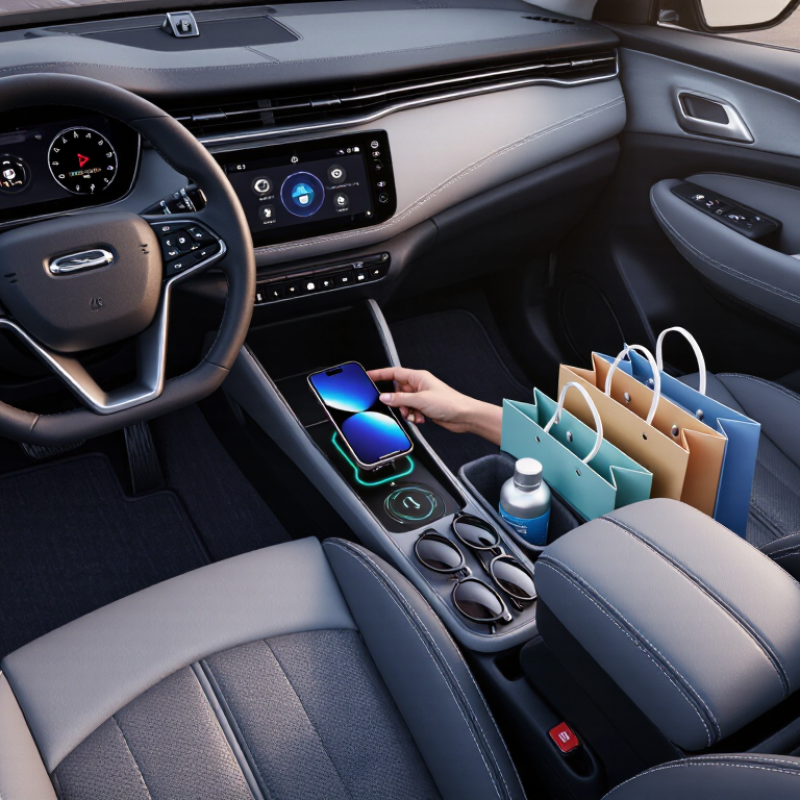
What Are the Latest Trends in Auto Accessories from China?
China’s auto accessory market is evolving beyond low-cost, one-size-fits-all products. More suppliers now offer vehicle-specific floor mats, storage organizers, lighting, and interior trim. Online shopping also lets buyers compare dimensions, materials, and installation details before ordering. Small changes matter: a mat that follows the footwell closely can stay in place better than a universal one.
Electric vehicles are influencing product design, too. Demand is growing for practical cabin storage, screen protection, charging-cable organizers, and accessories that suit quieter, technology-heavy interiors. Some manufacturers are using digital design tools to adjust products for different vehicle layouts. That can shorten development cycles, though a quick launch does not guarantee a good fit. Check dimensions and installation guidance.
The market is also paying more attention to material quality and clear product information. Buyers increasingly look for odor-conscious materials, durable stitching, and realistic photos showing how an item sits inside a car. Still, quality can vary between sellers, even when products look similar online. That is the less tidy part. Product testing, fitment checks, and responsive after-sales support remain important as the market expands.
| Market trend | Accessory categories | Relevant market data | What the data suggests |
|---|---|---|---|
| Electrification-focused accessories | Portable charging equipment, charging-cable storage, vehicle-to-load adapters, and EV-specific interior organizers | China produced 12.888 million and sold 12.866 million new-energy vehicles in 2024, up 34.4% and 35.5%, respectively, year over year. | The expanding NEV base creates a larger potential user group for accessories designed around charging, electric-vehicle storage, and in-car power use. The figures describe vehicles, not accessory sales. |
| Connected and smart in-car equipment | Dash cameras, wireless phone-connectivity adapters, vehicle data displays, and app-connected tire-pressure monitors | China’s total vehicle sales reached 31.436 million in 2024, according to the China Association of Automobile Manufacturers (CAAM). | A large vehicle market supports demand for retrofit devices that add connectivity or monitoring features. The total-sales figure is market context, not a measurement of smart-accessory adoption. |
| Travel, camping, and outdoor-use products | Roof racks, cargo boxes, portable refrigerators, compact power stations, and vehicle-mounted awnings | China exported 5.859 million vehicles in 2024, up 19.3% year over year, according to CAAM. | The export scale creates opportunities for accessories suited to different vehicle types and travel needs. Export totals do not indicate how many vehicles were sold with these products. |
| Vehicle-specific fit and customization | Custom-fit floor mats, trunk liners, sunshades, seat covers, and model-specific storage inserts | China sold 31.436 million vehicles in 2024, including 12.866 million new-energy vehicles (CAAM). | The breadth of vehicle types and the growing NEV segment make accurate fitment information increasingly important for accessory selection and online listings. |
| Safety and driver-assistance add-ons | Dash cameras, blind-spot monitoring kits, tire-pressure monitoring systems, and portable jump starters | CAAM reported 31.436 million total vehicle sales in China in 2024. This is a broad indicator of the size of the vehicle base, not a safety-accessory sales figure. | Safety-oriented products remain a practical retrofit category, but compatibility, installation quality, and clear product specifications matter for buyer confidence. |
| More sustainable materials and packaging | Recycled-fiber organizers, reusable protective covers, lower-plastic packaging, and durable replacement components | The cited CAAM vehicle statistics do not quantify sustainable-material use in auto accessories. | Sustainability is a product-development consideration rather than a trend that can be measured from vehicle sales alone. Material and environmental claims should be supported by product-level documentation. |
| Data note: Vehicle production, sales, and export figures are for calendar year 2024 and are reported by CAAM. They provide context for China’s vehicle market; they are not direct measurements of auto-accessory sales or market share. | |||
More products now match specific vehicle layouts. Buyers can compare dimensions, materials, and installation details online. A close-fitting floor mat may stay in place better.
Drivers are choosing cabin organizers, screen protectors, charging-cable bags, and compact tire inflators. Small details matter. Check fit and instructions before buying.
Compare the listed dimensions with your vehicle’s interior. Look for clear installation guidance and realistic product photos. A quick launch does not guarantee a good fit.
No. Tire-pressure monitors, rear-view cameras, and blind-spot alerts can be useful, but performance varies. Test whether alerts remain clear in rain and darkness.
Yes. A crowded dashboard may distract you. Keep the view clear, and remember that warning devices cannot replace attentive driving.
Breathable seat covers, cushioned neck supports, low-glare sunshades, and tidy cable storage can help. Some small rattles may become more noticeable in quiet cabins.
Not necessarily. Check the fabric, seams, care instructions, and heat resistance. A recycled label alone does not prove durability or low environmental impact.
Watch for unclear fit details, weak stitching, strong odors, or vague instructions. Similar-looking products can differ. That part is easy to overlook.
What Are The Latest Trends In Auto Accessories reflects a market increasingly shaped by connected technology, electric mobility, and drivers’ expectations for safer, more comfortable journeys. Accessories are evolving beyond basic add-ons: connected devices can support navigation, monitoring, and vehicle integration, while products designed for electric vehicles may help drivers organize charging equipment and make better use of cabin space. Safety-oriented features, such as visibility aids and driver-assistance accessories, are also drawing attention.
Personalization remains important, with practical options for improving comfort, storage, and interior style. At the same time, manufacturers are exploring durable, lightweight, and more sustainable materials. Buyers and businesses should assess product quality, vehicle compatibility, installation needs, and relevant safety and regulatory requirements before choosing accessories. These considerations can help ensure that new products are useful, reliable, and appropriate for the intended vehicle and market.
